
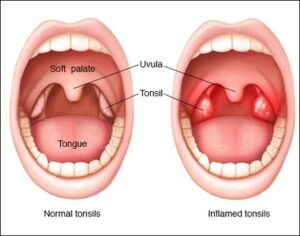
Treating tonsillitis with herbs and home remedies, the two lymph nodes located on either side of the back of your throat are the tonsils. They serve as a line of defense, preventing infections from entering your body. When the tonsils become infected, a common disease known as tonsillitis develops. Whether the illness is bacterial or viral will determine the course of treatment; recovery usually takes about a week.
Also, without treatment, tonsillitis associated with a sore throat can have significant side effects. The diagnosis of tonsillitis is also simple; usually, the symptoms disappear within seven to ten days. Additionally, regardless of medication use, tonsillitis usually heals within a few days for most people.
How does tonsillitis spread
Tonsillitis is contagious; your first line of defense against diseases is the tonsils. Since they produce white blood cells, which help in the body’s defense against disease. The viruses and germs that enter your body thru the mouth and nose are fought off by the tonsils. Although the germs that can cause tonsillitis are sometimes contagious, tonsillitis itself is not. Tonsillitis most often occurs due to viral infections. However, bacterial infections from group A streptococcus can also be the cause.
In addition, up to 70% of tonsillitis cases are caused by viruses similar to those that cause influenza and colds. Those who suffer from viral inflammation usually experience less severe symptoms than those who suffer from bacterial inflammation. Even if the tonsils are removed, you can still get throat infections. The bacteria and viruses responsible for tonsillitis are highly contagious. They are transmitted thru:
- Exchanging food, drinks, utensils, or kissing
- In addition to getting close to a sick person
- Also, touching your mouth or nose after coming into contact with a contaminated surface.
- Inhaling microscopic particles in the air when the patient coughs or sneezes.

What are the risk factors for tonsillitis
Risk factors for tonsillitis, as the following factors may make you more susceptible to developing tonsillitis. Among them:
- Exposure to germs
- Influenza viruses; common cold viruses
- Also, Epstein-Barr virus, herpes simplex
- Measles virus, cytomegalovirus, adenovirus
- An increased risk factor for inflammation is aging.
- The weather also has an effect due to high temperatures and increased pollution.
- The body’s production of immune cells may affect the frequency of inflammation.
How to gain weight in a healthy and balanced way
What are the signs of tonsillitis
Signs of tonsillitis, where the initial signs and symptoms of tonsillitis are swollen and inflamed tonsils. They can also become very severe at times, making it difficult to breathe thru the mouth. The symptoms of tonsillitis usually appear suddenly. Among them can be:
- A “rough” voice
- Excessive drooling
- Decreased appetite
- Ear pain and headache
- Scratch or inflammation in the throat
- Discomfort or trouble when swallowing
- The throat and tonsils are swollen and red.
- Also, white spots on the tonsils.
- Fever above 38 degrees Celsius
- Also, the lymph nodes are swollen.
- Vomiting, stomach pain, and bad breath
Additionally, they are usually small in size, but sometimes they can be larger. Although they can sometimes be annoying and difficult to remove, tonsil stones are generally not dangerous.

7 Guava Boil Recipes for Colon Health and Quick Weight Loss
How to diagnose tonsillitis
Diagnosis of tonsillitis, the general examination is what determines tonsillitis. The doctor looks for swelling around the tonsils, which is often accompanied by white spots. Additionally, doctors may look for signs of swollen lymph nodes and a rash, which sometimes appears on the outer part of the throat. They may also feel pain and swelling on both sides of your neck and examine your nose and ears for signs of infection.
Once the diagnosis of tonsillitis is confirmed, your healthcare provider should determine whether the infection is bacterial or viral. Using a long cotton swab, he will collect saliva and cells from the back of the throat. After that, the sample will be examined to determine whether group A streptococcus bacteria are present or not. If the test result is positive, you have strep throat, and if the results are negative, viral tonsillitis is the cause. To determine the cause of tonsillitis, tests may be necessary, including a blood test, referred to as a complete blood count.

How can tonsillitis be treated
Some rare bacteria cause kidney inflammation or rheumatic fever if left untreated. The causes determine the method of treatment. The doctor treats the bacterial diverticulum with antibiotics, while the viral one improves spontaneously. Doctors successfully use radiofrequency surgery or laser surgery. The potential treatment course is:
- The doctor prescribes antibiotics if the inflammation is bacterial.
- Your doctor may also suggest over-the-counter pain relievers.
- Also, performing a tonsillectomy or tonsil surgery.
- A person with inflammation who becomes dehydrated needs intravenous fluids.
- He may prescribe you medication as a single dose, or in the form of tablets that you take orally for a few days.

What are the care methods when suffering from tonsillitis
Methods of care when suffering from tonsillitis, maintaining proper hygiene is the most effective way to avoid tonsillitis. Since antibiotics will not help if you have viral tonsillitis; your body will fight the infection on its own. Therefore, to relieve the sore throat associated with tonsillitis, you can try the following remedies:
- Every three months, replace your toothbrush.
- Avoid smoke and hard meals.
- Avoid raising your voice, and use throat sprays.
- Also, get plenty of sleep.
- Eat rich meals, such as ice cream and flavored gelatin.
- Also, use warm, salted water for gargling.
- Always wash your hands, especially before touching your lips or nose.
- Additionally, use over-the-counter pain relievers.
- Try to avoid contact with people if you have an infection.
- Sip warm or very cold liquids to soothe a sore throat.
- Avoid sharing meals, drinks, or utensils.
- Suck on benzocaine lozenges, or any other lozenges containing medication.

Is dark chocolate beneficial and healthy
Finally, although tonsillitis is extremely annoying, it rarely poses a serious threat to life. It usually disappears within a few days with rest, drinking fluids, and sometimes medications as directed by a doctor.
























Post Comment